
Summary

Richland Resources Ltd (“Richland”) through it wholly-owned subsidiary, TanzaniteOne Mining Ltd (“TanzaniteOne”), is the largest and most scientifically advanced miner and supplier of tanzanite in the world. This unique position allows the opportunity to support and influence the entire mine to market process, ensuring that maximum stakeholder value is achieved at each stage of the process.
As a world leader in the mining and marketing of coloured gemstones, TanzaniteOne Mining Ltd is proud to contribute significantly tax revenues to the Tanzanian Government. It also provide direct employment to over 650 people and strives to improve the lives of the people in the surrounding local communities in which the Company operates in. The Company also continues to support the formalisation and growth of the gemstone mining industry in Tanzania. In this regard, the Company also commissioned a new cutting and polishing facility located at the mine in 2010 and will continue to expand our in house cutting operations over the next 12 months.
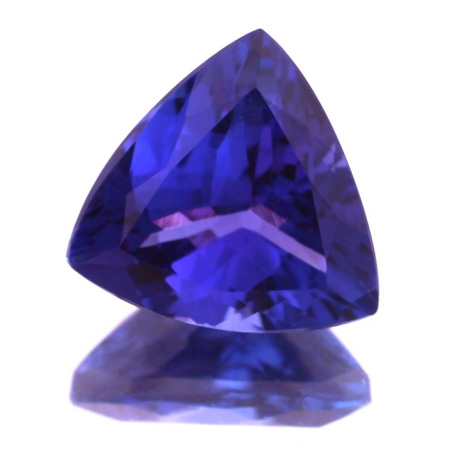
Richland is also using its mine-to-market knowledge of the coloured gemstone industry to actively diversify into other coloured gemstone mining and marketing projects in order to become the world’s leading premium coloured gemstone mining company. Growing in demand, not just for its exquisite beauty, but also because of its inherent scarcity, in that Tanzanite is only found in one place on earth - in Tanzania - specifically in the foothills of Mount Kilimanjaro.
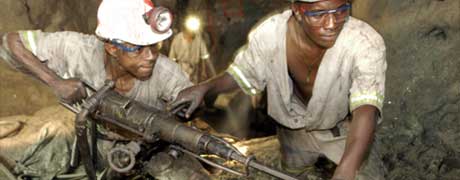
The tanzanite resource is divided into five blocks. TanzaniteOne Mining in Block C undertakes larger scale mining; medium scale mining is undertaken by Kilimanjaro Mining in Block A and Tanzanite Africa in Block D-extension. The Company’s neighbouring Blocks B and D are mined largely by artisanal miners. This poses a challenge for TanzaniteOne, notably in terms of undermining, whereby, the artisanal miners are mining into TanzaniteOne’s designated license area. The Company’s mining operation is considered a modern, low-cost operation and boasts an exemplary safety record. It applies international best practice in the design and implementation of its employment, social and environmental policies.
Mining

The Company achieved its record equalling annual production target of 2.2 million carats of tanzanite, from the processing of 37,092 tonnes in 2010. The average recovered grade of 59 carats per tonne is 18% higher than the average grade of 50carats per tonne achieved in 2009.
The production levels increased by 300,000 carats in 2010, up 16% from the 1.9million carats produced in 2009. The increase in production was guided by the increase in demand experienced in the international tanzanite industry.
Significant “off-reef” mine development took place during 2010 to ensure shafts and infrastructure is constantly being developed to intersect new tanzanite bearing fold structures. As a result of the ongoing shaft and off-reef development the Company intersected a projected fold structure located at a vertical depth of 450m in Main Shaft, located in the centre of the Company’s licence area. The newly intersected fold structure confirms the accuracy of the Company’s geological models and projections and initial indications suggest an exceptionally high potential grade and quality yield profile can be expected from the fold structure.
Material transport, loading and hoisting efficiencies were significantly improved during the year by enhancing the mine’s underground surge capacities through the construction and installation of secure underground bins. The new bins were installed at CT shaft in levels 25, 35 and 46 as well as at level 80 in Main Shaft.
Processing

Processing and sorting take place on site within purpose-built infrastructure and facilities. The ore treatment plant, which includes a Dense Media Separator (DMS), has a current capacity estimated at approximately 10,000 tonnes per month, on a single shift. The DMS concentrate passes through a fully automated optical sorting system, where after the “super concentrate” is then hand sorted and graded. Rough tanzanite is sorted both manually and using a fully automated rough tanzanite optical sorting and primary grading system, a world first in the coloured gemstone industry.
The processing and crushing plant continues to operate on a single shift basis. There is sufficient capacity to increase production through the introduction of a second shift at the plant if required.
Significant improvements were also made during the year to the processing plant. A large tonnage storage area was created at the plant and is secured with an outer razor fence and inner electric fence to create additional surge capacity at the plant. New bin liners have been installed, new conveyors were fitted and the primary jaw crusher has been fitted with new jaws.
Production Statistics
| Unit | FY2010 | FY2009 | FY2008 | FY2007 | FY2006 | FY2005 | |
|---|---|---|---|---|---|---|---|
| On Mine cash Costs | $/carat | 3.69 | 3.63 | 3.60 | 3.72 | 2.90 | 1.41 |
| Development | meters | 2504 | 2519 | 3877 | 3935 | 4671 | 3700 |
| Plant feed | tonnes | 37 092 | 38 154 | 42 318 | 25 367 | 15 896 | 20 931 |
| Grade | c/tonne | 59 | 50 | 52 | 67 | 77 | 70 |
| Tanzanite Production | carats | 2 203 818 | 1 915 440 | 2 203 162 | 1 700 134 | 1 230 600 | 1 460 075 |
*On mine cash costs include operating costs, mine administration costs and royalty charges incurred at the mine
Life of Mine and Geology

TanzaniteOne currently has an estimated life of mine of up to 20 years at the current mining rate of approximately 2.2 million carats per annum. Tanzanite mining is occurring at ever increasing depths and TanzaniteOne has recently intercepted a large tanzanite bearing structure at a down-dip depth of 800m.
Due to the structurally unique and complex nature of the orebody, a firm geological understanding forms a critical and integral component of the successful mining of tanzanite. The Geology and Survey department comprise of 11 qualified professionals who are world experts in the tanzanite industry. All underground mining areas are visited, monitored and mapped on a daily basis by a geologist and the structural interpretations are communicated to the mining department. Mining operations are currently concentrating in the following structures:
| Askari Shaft | Mining within Fold Stack 1(FS1) |
|---|---|
| Delta Shaft | Selective Mining and stoping along fold limb structures |
| Main Shaft |
Mining within Fold Stack 2 (FS2); Sinking of the Main Haulage Shaft that is now down to a declined depth of 800m. Developing the newly intersected Fold Stack 3 (FS3) |
| CT Shaft | Mining Fold Stack 3 (FS3), Level 25 Ramp-Structures, Level 41 and Fold Stack 4 (FS4). |
| Bravo Shaft | Exploration to intersect Fold Stack 4 |
Safety, Training and Environmental Management

The Company experienced no fatalities during the year and achieved a Lost Time Injury Frequency Rating (“LTIFR”) of 0.67 for 2010, which is significantly below the industry average. This is a testimony of the Company’s focus on safety and the success of the Safety and Training Department’s safety, awareness and training initiatives. The Company’s safety standards are based on the International Occupational Health and Safety Standards. All Company employees have been inducted and receive regular training to meet the required Safety Standards.
Training emphasis focused on skills enhancement and exposure to outcomes based training and assessment and consists of both theory and practical assignments. Practical evaluation was achieved through planned task observations, interviews, random inspections and verbal assessments.
The following certificates of excellence have been issued after the successful completion of training courses:
| Strata Control Training Course | 27 |
|---|---|
| Enviromental waste Management | 12 |
| Explosive Handling / Support / Safety | 38 |
| supervisory Skills | 10 |
| Team Leader Training | 14 |
| Jack Hammer Operators | 6 |
| Blasting Ticket Refresher Course | 12 |
Environmental management has improved significantly with a new Environmental Management System having been initiated ensuring compliance and management of all aspects. Environmental monitoring, auditing and inspections continue and have drastically improved the Environmental performance. Environmental training and awareness has been implemented and has empowered employees to identify and reduce associated environmental risks. A final Environment Audit report has been submitted to National Environmental Management Council (NEMC) for the approval of a new Environmental Certificate.
Security
A comprehensive security review was undertaken at the mine and at the retail outlets in Arusha at the beginning of the year. A significant restructuring of the security department has taken place and additional Nepalese Ghurkha’s have been employed as part of the security reinforcement restructuring process.
A clear delineation of roles within the security department has been achieved, allowing for an internal investigation capacity, crime intelligence gathering and proactive search teams, which have significantly enhanced the capacity and efficiency of the security department. A retired senior Tanzanian police officer has been appointed as full time police liaison officer, responsible for liaising with the Tanzanian Police Force at both local and national level and follow through on criminal prosecutions.
A significant upgrade of the CCTV operation has been completed acting as a further deterrence and allowing for quality-recorded material being available for criminal prosecutions and providing for greater redundancy in the event of power failures.
The use of X-Scann, (non-invasive personnel search facility) remains the subject of discussions with the government after a ban was imposed on the use of this technology due to concerns on the health of employees. It needs to be noted that the machines were approved and licensed for use by the Tanzanian Atomic Energy Commission, the statutory body responsible for the licensing of such equipment, and these machines are also in use at other institutions within the mining industry around the world.
A structure has been put in place for continual review of security policies and procedures by management/peers throughout the operation. A comprehensive audit was carried out by our insurers/underwriters at the mine and at the retail outlets in Arusha and no major concerns impacting on our insurance policies were noted.
Undermining remains a critical issue and TanzaniteOne together with the relevant governmental agencies continues to address this issue at both local and national level. TanzaniteOne has also engaged artisanal miners in neighbouring properties with regards to safe mining operations and other health and safety issues in order to create awareness on the consequences of unsafe mining practices.
Cutting and Polishing in Tanzania

The ban on the export of rough tanzanite of 5 carats (1 gram) and above was announced and implemented in July 2010 by the Tanzanian Government, with limited to no consultation with the various industry stakeholders. The Company submitted a comprehensive compliance programme and proposal to the Tanzania Government and have urged the Government to consult will all industry stakeholders.
The Company and other stakeholders are still in ongoing discussions with the Government of the United Republic of Tanzania to research and initiate development of economically sustainable domestic cutting operations and agreements, pursuant to ban on the export of rough tanzanite larger than 5 carats (1 gram).
As a result of the discussions with the Government by various stakeholders a moratorium was called by the Government of Tanzania allowing the export of rough tanzanite of all sizes until 31 December 2010.
Since the Government announced the implementation of the export ban the Company immediately accelerated the construction and establishment of a precision cutting facility at the mine sorting facility in Merelani, Tanzania, which has been part of the Company’s long term strategy. A dedicated facility with full indexing benches was brought online in the fourth quarter. Existing cutters and polishers were able to use the potential of the facility immediately, and the training of further local polishers started. The facility is expected to reach full utilisation in mid 2011. Sight holders were able to use the facility and TanzaniteOne polishing staff to polish their large rough purchases from December 2010, and are excited to be able to continue to polish their material in Tanzania in 2011. Indexing, as opposed to free-hand polishing, allows for defined tolerances and repeatability, which is essential for the new technology cuts developed in-house. The introduction in early 2011 of advanced polishing trainers will speed up the technical abilities of the local TanzaniteOne polishers and skill them to be able to produce the more advanced designs. The capacity to meet legal requirements for local beneficiation has been established, and further capacity and technical development will enable value-add polished projects to be established.
The Tanzanite Experience (TTE)

The Tanzanite Experience retail operations were consolidated in the first half of 2010 with focus on lower inventory levels, greater stock turn, and delivering higher profitability and group contribution. Another outlet was added in the third quarter with positive contribution in the fourth quarter. TTE sales were 26% higher in 2010 compared to 2009, at $1.45 million. Opportunities for further expansion in 2011 exist in the Dar es Salaam and Zanzibar markets, coinciding with further production capacity with the established polishing facility. A franchise model has been developed for entry into markets and sub-markets where it is not feasible to enter as a wholly owned entity but instead leverage off existing operations. The operation focus will remain on high stock turnover and timely replacement from company polishing operations, generating cash contribution and retail polished margins.
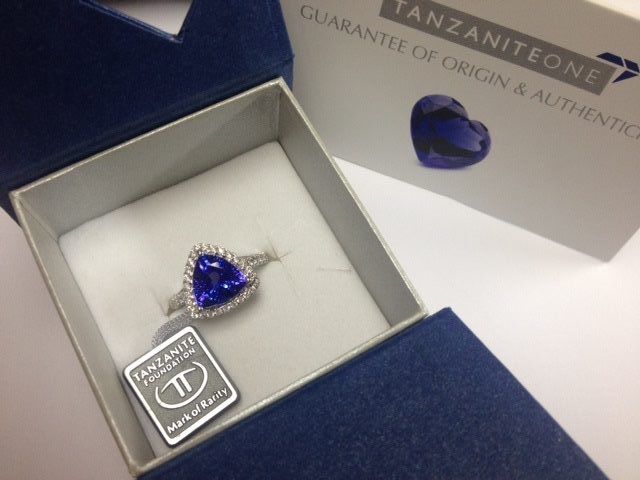
The TanzaniteOne Jewellery Collection was established during the year to highlight the design opportunities for the new technical cuts in mid to light contrast colours. Market testing of the designs and stone appeal occurred in Australia, and market development progressed into Asia in the fourth quarter. The market reaction has been pleasing, and order based commercial channels are under development.
For more information visit www.tanzaniteexperience.com.
Tanzanite Foundation

Since 2003, the Tanzanite Foundation has promoted tanzanite and stimulated the growth and development of the tanzanite market. The main objective has been to build and maintain the desirability of this exceptional gemstone, while entrenching our core values for all participants operating in an ethically and socially conscious industry. The focus is on empowering the market through education and exposure, pioneering social development and skills transfer, encouraging environmental objectives and engaging the communities at source.
Mindful of these objectives, 2010 was a highly successful and productive year. With exposure of tanzanite and demand growing, the Tanzanite Foundation collaborated with numerous international designers and jewellery manufacturers to add value and entrench credibility thereby ensuring Sightholder sell-through.
A sales incentive-based competition by a major American Caribbean retailer was held, whereby top tanzanite performers were rewarded with a once-in-a lifetime experience to visit the TanzaniteOne mining operation. This was the third such educational experience co-ordinated by the Tanzanite Foundation, once again instilling further passion in each and every delegate, ensuring even higher tanzanite sales and memories that last a lifetime.
A strong below the line campaign has been consistently pursued, ensuring constant communication with editorial decision makers in the fashion, economic and trade press. Results showed tanzanite-focused stories and product placements in numerous publications. An ongoing and consistent impactful presence at most Gem and Jewellery Trade Shows helped disseminate information and build trust. This in turn ensures tanzanites’ top of mind presence and secures confidence in the Tanzanite Foundation brand, which our members choose to include in their advertising.
Jewellery designers and consumers at large are intrigued with tanzanite and it’s ability to evoke emotion.
For more information visit www.tanzanitefoundation.org.